3 min read
Modernizing Loyalty: How Tonic3 Drives High-Volume Adoption for Pizza Hut
Ale Sanchez
:
Jan 31, 2026 5:18:52 PM
Giving Client Kudos
Delivering a High-Fidelity Checkout Prototype to Accelerate Loyalty Enrollment and Reduce Friction is not an easy project to get prioritized in a large organization. Pizza Hut teams were aware of the possible impact to their return business, and pushed for stakeholder alignment to focus on the user experience to see quantifiable results. And that extra effort up front paid off.
Joanne Kok, UX & Research Principal for Tonic3
Stagnant loyalty engagement and high friction in the checkout-to-enrollment customer journey.
16 unique high-fidelity checkout scenarios validated through iterative rapid prototyping.
40% Reduction in time-on-task and 100% user preference for the new design.
40%
Time-on-Task Reduced
Comprehensive
Risk Reporting Output
A11Y
Meets Accessibility Standards
16
High-fidelity Prototypes for Testing
The Challenge:
Friction in "Hut Rewards"
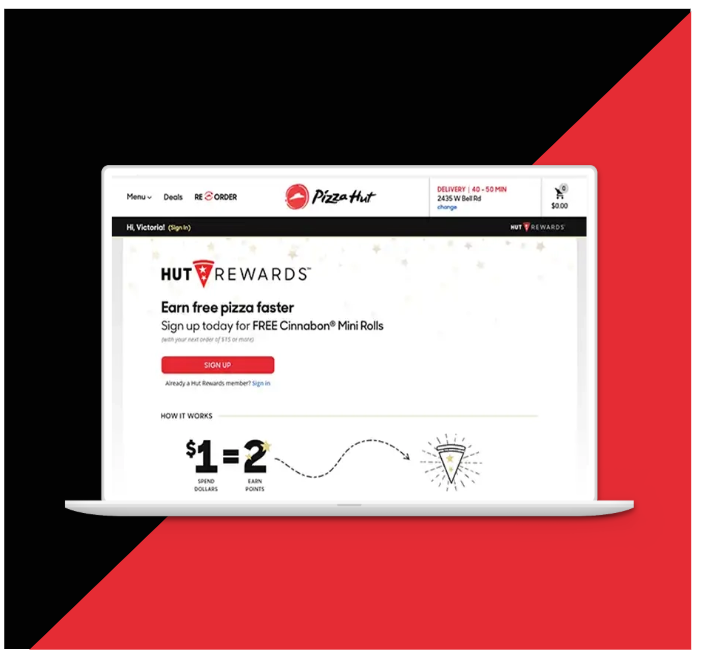
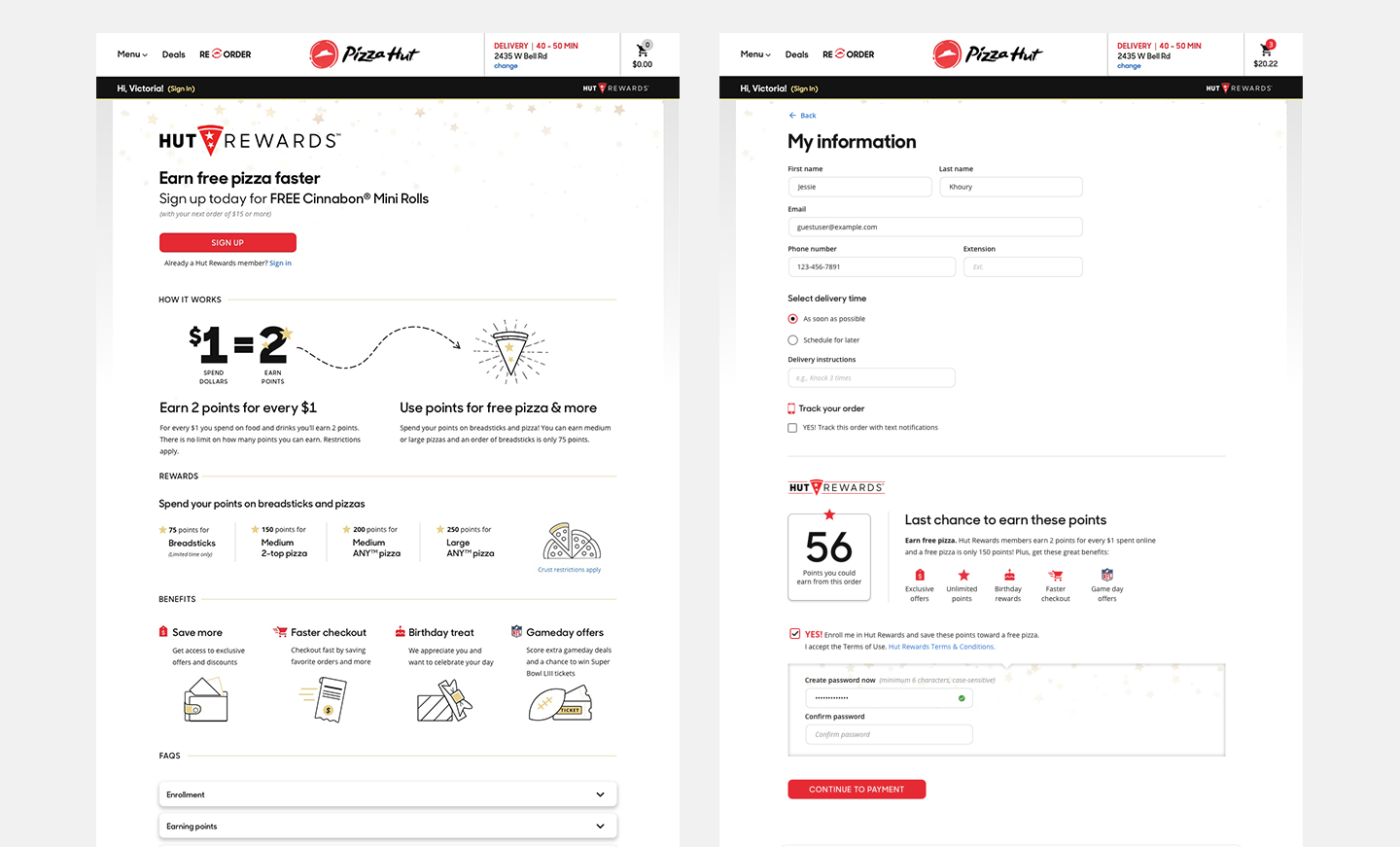
Pizza Hut needed to transform its "Hut Rewards" program into a friction-free experience. The primary business hurdle was a lack of clarity in the program structure, which prevented casual diners from becoming active, engaged members. Specifically, the Checkout Flow—the most critical moment for loyalty acquisition—was cluttered and failed to incentivize immediate sign-ups.
The Approach:
Accelerating Adoption with Rapid Prototyping Design Sessions
To meet Pizza Hut’s aggressive Q2 release goals, Tonic3 deployed a high-velocity, expert-led delivery model that blended deep user research with rapid engineering. We functioned as a strategic extension of the Pizza Hut UX and Loyalty teams, using a disciplined sprint-based methodology to move from initial kick-off to a live, production-ready solution in a single year.
Human-Centered UX: Rapid Prototyping and Testing
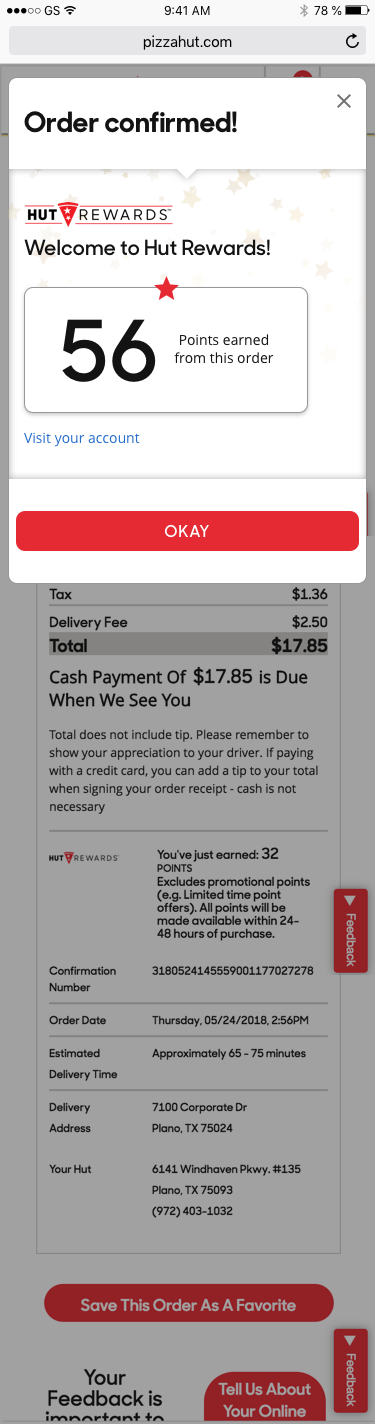
For Pizza Hut to have concrete data for decision-making, this work generated 16 high-fidelity, production-realistic prototypes covering a full range of checkout scenarios. These weren’t static mockups—they were interactive assets used for eye-tracking and user research to pinpoint exactly where users hesitated or dropped off, A/B testing to directly compare existing flows with optimized versions, and time-on-task analysis to demonstrate that the new information architecture helped users complete orders faster while seamlessly opting into rewards.
Custom-Built Code & Technology Integration: For "No Drama" Delivery
To ensure the vision was executable, we aligned with Pizza Hut's modern tech stack to prevent delivery drama:
* Progressive Web App (PWA): Built for mobile-first speed.
* Contentful (CMS): Implemented to allow the loyalty team to update rewards dynamically.
* Enterprise Standards: Adhered to accessibility (A11Y) and QA consulting to ensure global franchise scalability.
The Impact: Adoption at Scale
The results for Pizza Hut were definitive. The iterative testing phase confirmed a 40% reduction in time-on-task, effectively removing the "time tax" of joining a loyalty program. Most importantly, the research yielded 100% user preference for the Tonic3-designed flow over the legacy system, clearing the path for a Q2 release.
Human-Centered UX: Rapid Prototyping and Testing
For Pizza Hut to have concrete data for decision-making, this work generated 16 high-fidelity, production-realistic prototypes covering a full range of checkout scenarios. These weren’t static mockups—they were interactive assets used for eye-tracking and user research to pinpoint exactly where users hesitated or dropped off, A/B testing to directly compare existing flows with optimized versions, and time-on-task analysis to demonstrate that the new information architecture helped users complete orders faster while seamlessly opting into rewards.
Custom-Built Code & Technology Integration: For "No Drama" Delivery
To ensure the vision was executable, we aligned with Pizza Hut's modern tech stack to prevent delivery drama:
* Progressive Web App (PWA): Built for mobile-first speed.
* Contentful (CMS): Implemented to allow the loyalty team to update rewards dynamically.
* Enterprise Standards: Adhered to accessibility (A11Y) and QA consulting to ensure global franchise scalability.
The Impact: Adoption at Scale
The results for Pizza Hut were definitive. The iterative testing phase confirmed a 40% reduction in time-on-task, effectively removing the "time tax" of joining a loyalty program. Most importantly, the research yielded 100% user preference for the Tonic3-designed flow over the legacy system, clearing the path for a Q2 release.
Outcomes +
Why It Matters
-
What did Pizza Hut have to change to improve the User Adoption Rate in its customer loyalty program?
By simplifying the 16 unique ways a user can check out, we made "joining" the program a background task rather than a foreground hurdle. Reducing time-on-task by 40% directly correlates to higher conversion rates at the most sensitive part of the funnel.
-
How did the Tonic3 approach to prototyping reduce execution risk?
We replaced design guesswork with research-backed confidence. Using eye-tracking and A/B testing on high-fidelity prototypes—well before a single line of production code—we validated the experience so the final build clearly aligned with the preferences and behaviors of the entire target audience.
-
What technology ensured the Pizza Hut Loyalty project maintained High Performance?
Integrating Contentful as the CMS ensured that the marketing team could manage loyalty offers without needing developer intervention, while the PWA architecture guaranteed the speed required for high-traffic events like the Super Bowl.